Common Spanish Verbs: The 20 You Will Use Every Day
The most useful Spanish verbs for beginners, how regular -ar, -er and -ir verbs work in the present tense, and the irregular ones to memorize first.
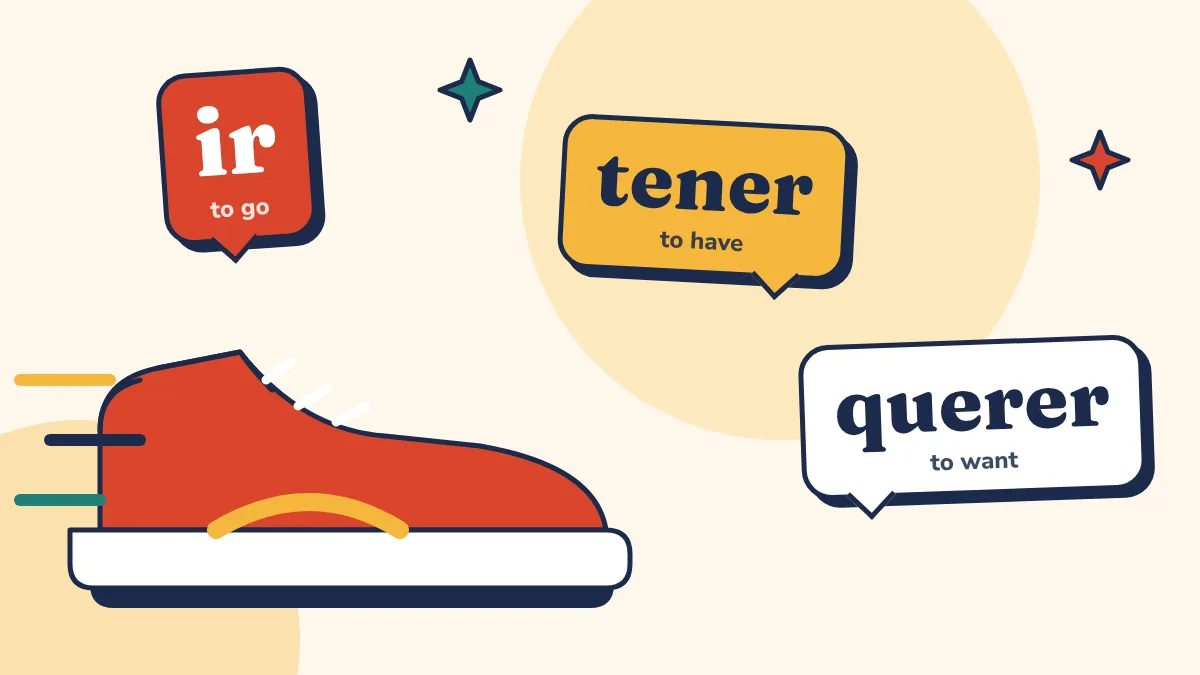
Verbs are the engine of Spanish. If you know a few dozen of them, you can say a surprising amount. This guide gives you the 20 most useful ones, how regular verbs work, and four patterns that unlock hundreds of sentences.
The 20 verbs to learn first
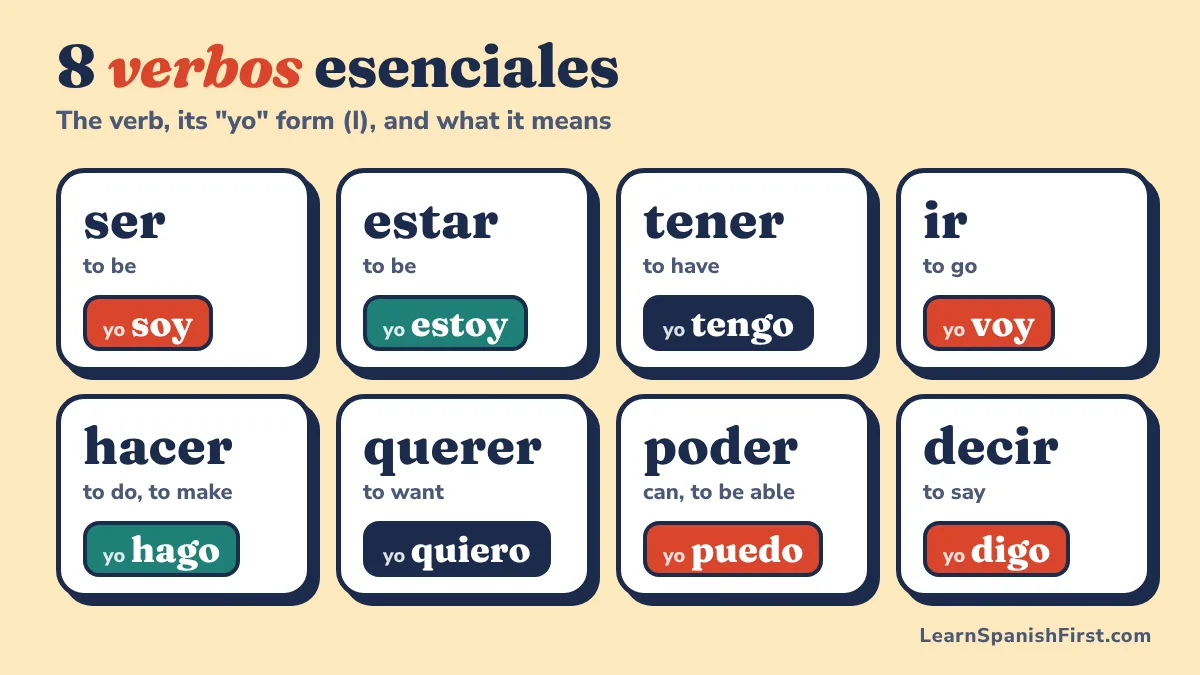
The last column shows the yo (I) form, which is what you use to talk about yourself.
| Spanish | English | I… (yo) |
|---|---|---|
| ser | to be (identity) | soy |
| estar | to be (state, place) | estoy |
| tener | to have | tengo |
| ir | to go | voy |
| hacer | to do, to make | hago |
| querer | to want | quiero |
| poder | to be able to, can | puedo |
| decir | to say, to tell | digo |
| ver | to see | veo |
| dar | to give | doy |
| saber | to know (a fact) | sé |
| venir | to come | vengo |
| hablar | to speak | hablo |
| comer | to eat | como |
| vivir | to live | vivo |
| necesitar | to need | necesito |
| trabajar | to work | trabajo |
| comprar | to buy | compro |
| escribir | to write | escribo |
| gustar | to like (see below) | me gusta |
The first ten are irregular, so memorize them as they are. The rest follow the regular patterns below.
Regular verbs: three families
Spanish verbs end in -ar, -er or -ir. For regular verbs, drop that ending and add new ones.
| Person | hablar (to speak) | comer (to eat) | vivir (to live) |
|---|---|---|---|
| yo | hablo | como | vivo |
| tú | hablas | comes | vives |
| él / ella / usted | habla | come | vive |
| nosotros | hablamos | comemos | vivimos |
| ellos / ellas / ustedes | hablan | comen | viven |
In Spain you will also use vosotros (habláis, coméis, vivís), but you can skip it at the start.
Four patterns that unlock a lot
- Quiero + verb: Quiero comer. I want to eat.
- Puedo + verb: ¿Puedo pagar con tarjeta? Can I pay by card?
- Voy a + verb: Voy a trabajar mañana. I am going to work tomorrow.
- Tengo que + verb: Tengo que irme. I have to go.
Once you know these four, you can build sentences with almost any verb in the list.
Example sentences
- Soy de California. I am from California.
- Estoy cansada. I am tired.
- Tengo dos hermanos. I have two brothers or siblings.
- Voy al mercado. I am going to the market.
- Hago la cena. I am making dinner.
- Vivo cerca del centro. I live near downtown.
- Necesito ayuda. I need help.
The tricky one: gustar
Gustar works backward from English. You do not say “I like pizza.” You say “pizza is pleasing to me.”
- Me gusta la pizza. I like pizza.
- Me gustan los tacos. I like tacos. (plural because tacos is plural)
- ¿Te gusta el café? Do you like coffee?
Use gusta for one thing or an action, and gustan for more than one thing.
How to practice
- Pick two verbs a day, and say five sentences out loud with each.
- Link each verb to something in your day. Como at lunch, voy when you leave the house.
- Learn the irregular ones with real phrases, not as lists. Tengo hambre sticks better than “tengo = I have.”
Want the two verbs that confuse everyone? Read our guide to ser vs estar. For the full plan, see how to learn Spanish in 3 months.
Questions
What are the most common verbs in Spanish?
Ser, estar, tener, ir, hacer, querer, poder, decir, ver and dar are among the most common. Learning these first covers most everyday sentences.
How do you conjugate regular Spanish verbs?
Drop the -ar, -er or -ir ending and add the endings for the person. For hablar: hablo, hablas, habla, hablamos, hablan.
How do I say 'I want to' in Spanish?
Say 'quiero' plus a verb: 'Quiero comer' (I want to eat). 'Quiero' comes from 'querer.'
How do I talk about the future in Spanish?
Use 'ir a' plus a verb: 'Voy a trabajar' means 'I am going to work.' It is the easiest way to talk about the future as a beginner.
Ready to go beyond cheat sheets?
Lists get you started. To actually speak, you need audio, repetition and a clear order to learn things. Our recommended course covers all three.
Affiliate link. We may earn a commission at no extra cost to you. Disclosure.
Get the free Spanish Starter Pack
Printable cheat sheets in one bundle, sent to your inbox.
Free, no spam. Unsubscribe any time.