How to Learn Spanish in 3 Months (A Realistic Plan)
What you can honestly learn in 3 months, a simple month-by-month plan, and the mistakes that stall most beginners.
Heads up: this post has affiliate links. If you buy through them we may earn a commission at no extra cost to you. Full disclosure.
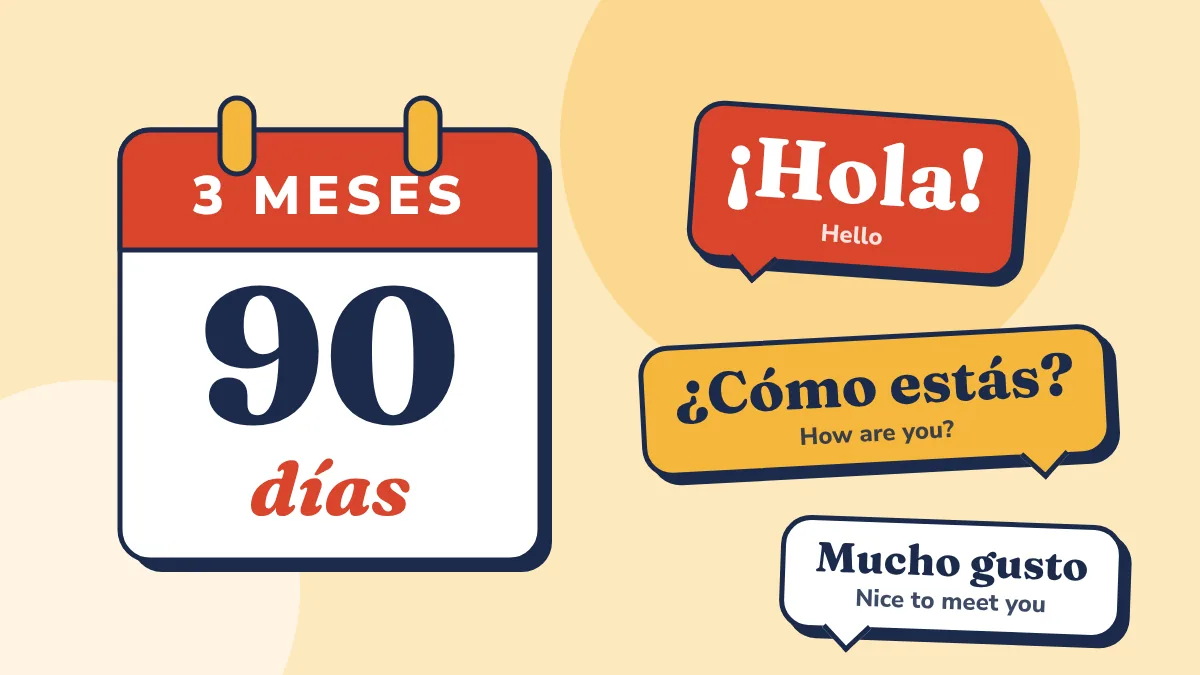
You will not be fluent in 3 months. Anyone who promises that is selling something. But in 3 months you can go from zero to simple, real conversations, and that is a goal worth chasing. Here is what you can honestly expect, and a plan to get there.
What you can expect after 3 months
The US Foreign Service Institute estimates that English speakers need roughly 600 to 750 class hours to reach professional working ability in Spanish. Three months of daily practice is a small slice of that, so aim for a different target: comfortable beginner Spanish.
With steady practice, about 30 to 45 minutes a day, most people can:
- Introduce themselves and ask basic questions
- Order food, ask for directions and handle simple shopping
- Talk about their day, family and work in the present tense
- Understand slow, clear speech when it uses words they know
What you probably can’t do yet:
- Follow fast native conversations or movies without subtitles
- Use past and future tenses without thinking
- Joke, argue or explain complicated ideas
That is a good place to be after 90 days. It is also exactly where most app users stall, so the plan below focuses on speaking from the start.
The 3-month plan
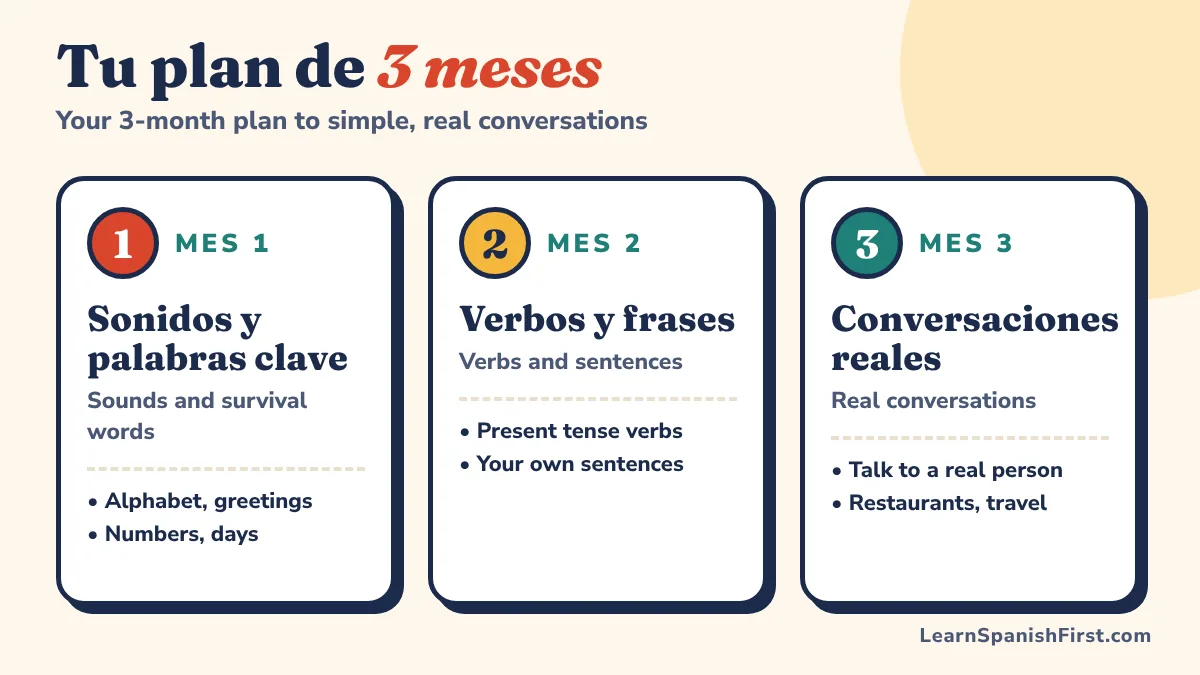
Month 1: Sounds and survival words
Goal: say hello, say who you are, count, and read Spanish out loud without fear.
- Learn the alphabet and the sounds. Spanish is spelled the way it sounds, so this pays off fast. Start with our Spanish alphabet cheat sheet.
- Learn greetings and polite phrases.
- Learn numbers, the days of the week, the months and the colors.
- Say everything out loud. Reading silently does not train your mouth.
Month 2: Verbs and sentences
Goal: build your own simple sentences.
- Learn the three verb families (-ar, -er, -ir) in the present tense. Our guide to common Spanish verbs is the place to start.
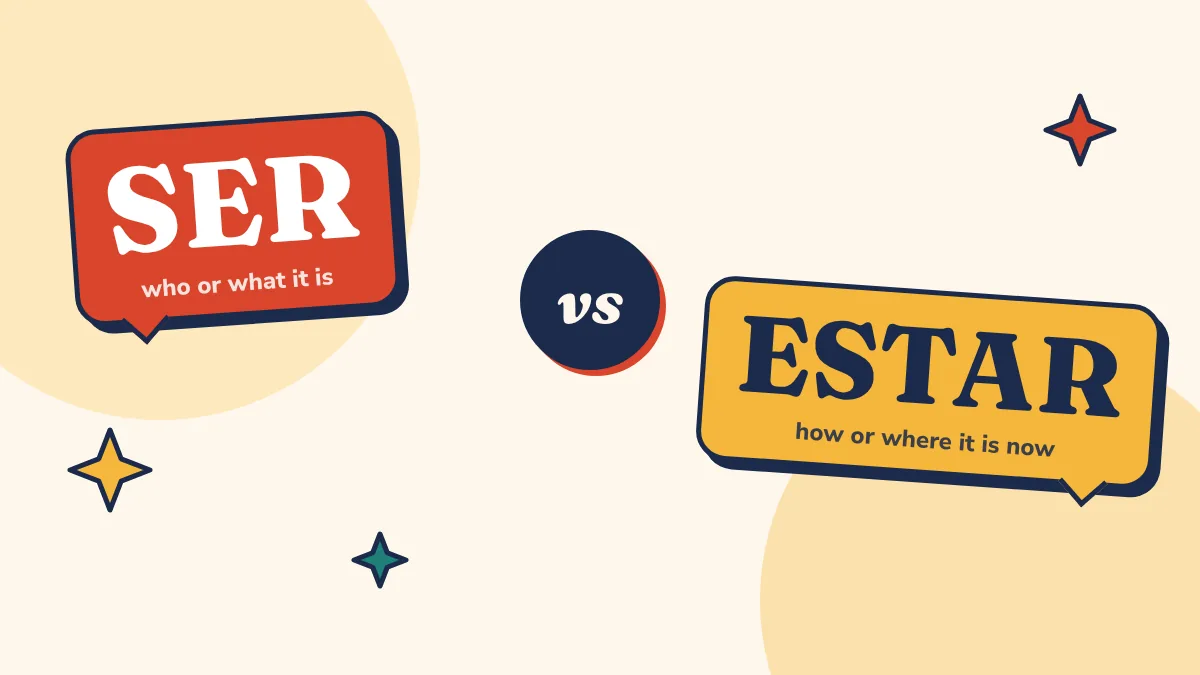
- Get a first feel for ser vs estar. Do not try to master it yet.
- Learn the useful verbs tener, ir, querer and poder. They unlock most everyday sentences.
- Practice “ir a + verb” to talk about the near future, like Voy a comer (I am going to eat).
Month 3: Real conversations
Goal: talk to a real person every week.
- Book a weekly session with a tutor or a language exchange partner. Even 20 minutes helps. Sites like italki and Preply make this easy.
- Learn the phrases for real situations: restaurants, travel and family and feelings.
- Add a few past tense phrases, like fui (I went) and comí (I ate).
- Listen to slow, beginner-friendly Spanish every day.
A simple 40-minute daily routine
- 10 minutes: listen. An audio lesson or a beginner podcast.
- 15 minutes: new material. One lesson from your course or one cheat sheet.
- 10 minutes: speak. Repeat the phrases out loud. Record yourself if you can.
- 5 minutes: review. Go back over yesterday’s words.
Five days a week beats one long weekend session. Your memory needs the repetition.
Mistakes that stall beginners
- Chasing streaks instead of speaking. A 400-day streak does not mean you can hold a conversation.
- Only reading and tapping answers. Recognizing a word is easier than producing it. Practice saying things from memory.
- Hopping between resources. Pick one main path and stick with it for the 3 months.
- Waiting to feel ready to talk. You will not feel ready. Start in month 2 or 3 anyway.
What to use
You can do a lot for free. Our cheat sheets are free, and there are good free audio options such as the Language Transfer course and Dreaming Spanish for listening practice.
If you would rather have one place with audio lessons, grammar explanations and a clear order to follow, Rocket Spanish is the course we point beginners to. It is not perfect for everyone, so read our honest Rocket Spanish review first. Rocket says it offers a 60-day money-back guarantee on web purchases, which lowers the risk of trying it.
Whatever you choose, the plan stays the same: learn the core words, say them out loud, and talk to a real person as soon as you can.
Questions
Can you learn Spanish in 3 months?
You can learn enough Spanish in 3 months to have simple, real conversations, order food, ask directions and talk about your day. You will not be fluent. Fluency takes much longer.
Can you become fluent in Spanish in 3 months?
No. Fluency usually takes well over a year of regular practice. Three months is enough to get comfortable at a beginner level, which is a great foundation.
How many hours a day should I study Spanish?
Most beginners do well with 30 to 45 minutes a day, five or six days a week. Short daily sessions beat one long weekend session.
What should I learn first in Spanish?
Start with sounds, greetings, numbers and the most common verbs. Then build simple sentences and start speaking with real people as early as you can.
Ready to go beyond cheat sheets?
Lists get you started. To actually speak, you need audio, repetition and a clear order to learn things. Our recommended course covers all three.
Affiliate link. We may earn a commission at no extra cost to you. Disclosure.
Get the free Spanish Starter Pack
Printable cheat sheets in one bundle, sent to your inbox.
Free, no spam. Unsubscribe any time.