Spanish Greetings: Hello, Good Morning and How to Reply
The Spanish greetings you will use every day, how to say good morning, afternoon and night, how to ask how someone is, and how to reply.
Greetings are the first thing to learn, because you will use them in every conversation. Here are the ones that matter, how to reply, and when to be formal.
Hello and goodbye
| Spanish | English | Say it |
|---|---|---|
| hola | hello, hi | OH-lah |
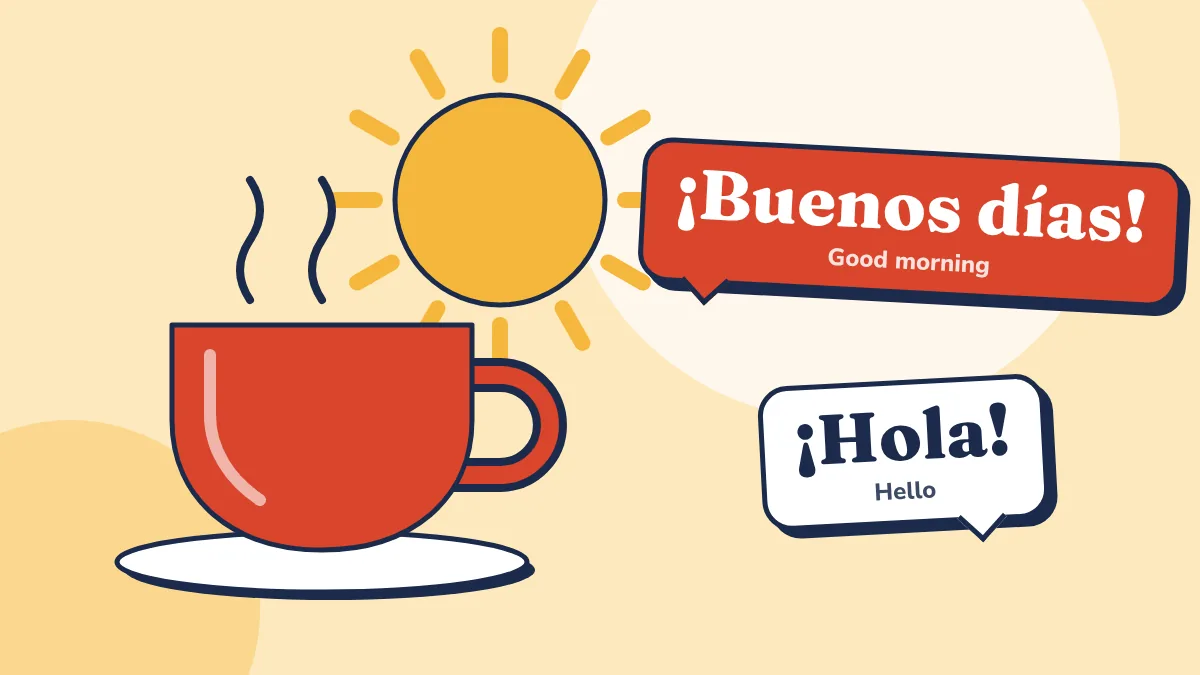
| buenos días | good morning | BWEH-nohs DEE-ahs |
| buenas tardes | good afternoon | BWEH-nahs TAR-dehs |
| buenas noches | good evening, good night | BWEH-nahs NOH-chehs |
| adiós | goodbye | ah-DYOHS |
| hasta luego | see you later | AHS-tah LWEH-goh |
| hasta mañana | see you tomorrow | AHS-tah mah-NYAH-nah |
| nos vemos | see you around | nohs BEH-mohs |
| chao | bye (casual) | CHOW |
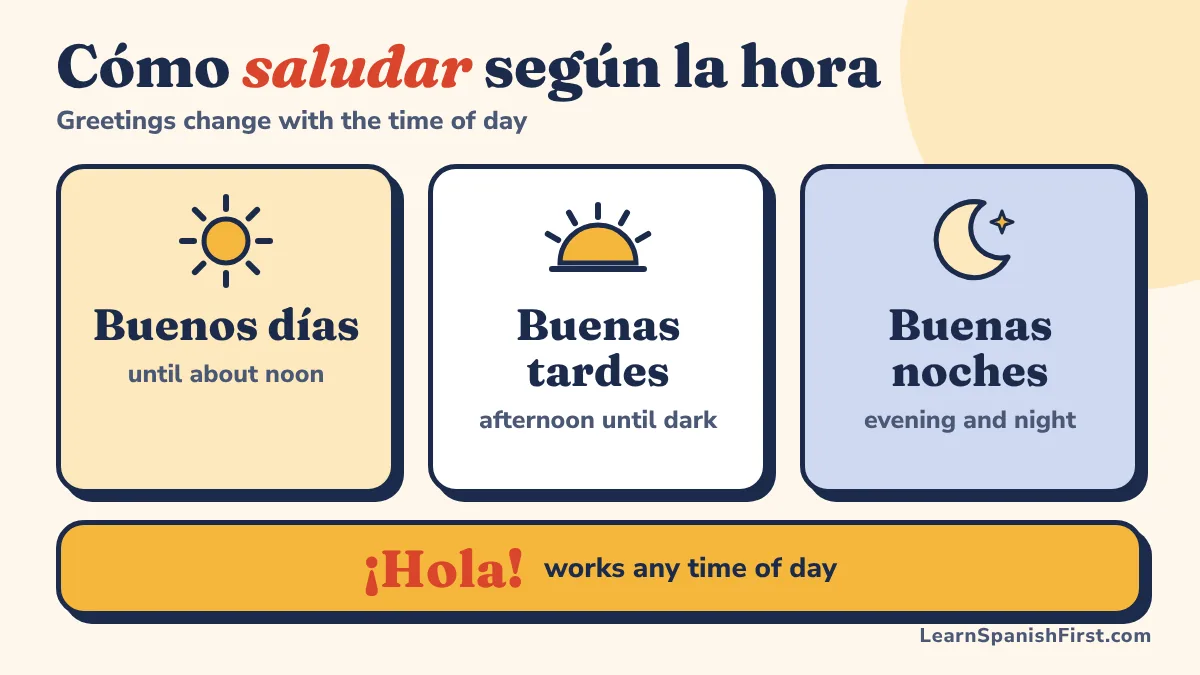
Time of day: buenos días until about noon, buenas tardes from noon until dark, buenas noches after dark. You can say buenas noches when you arrive and when you leave.
How to ask “How are you?”
| Spanish | When to use it |
|---|---|
| ¿Cómo estás? | Informal, with friends and family |
| ¿Cómo está usted? | Formal, to show respect |
| ¿Qué tal? | Casual, “What’s up?” or “How’s it going?” |
| ¿Cómo te va? | Casual, “How’s it going?” |
How to answer
- Bien, gracias. ¿Y tú? Good, thanks. And you?
- Muy bien. Very well.
- Más o menos. So-so.
- Mal. Not good.
- Todo bien. All good.
Use ¿Y usted? instead of ¿Y tú? when you are being formal.
Introducing yourself
- Me llamo Ana. My name is Ana.
- ¿Cómo te llamas? What’s your name? (informal)
- ¿Cómo se llama usted? What’s your name? (formal)
- Mucho gusto. Nice to meet you.
- Encantado (if you are a man) or Encantada (if you are a woman). Pleased to meet you.
- Soy de los Estados Unidos. I am from the United States.
Tú or usted?
Spanish has two ways to say “you.” Tú is friendly and informal. Usted is formal and respectful. If you are unsure, start with usted with older people, in business, or with someone you just met. Most people will quickly tell you “tutéame” (use tú with me) if they prefer the casual form.
Please, thanks and sorry
- Por favor. Please.
- Gracias. Thank you.
- Muchas gracias. Thank you very much.
- De nada. You’re welcome.
- Perdón. Sorry, excuse me.
- Con permiso. Excuse me (to get past someone).
A sample conversation
A: ¡Hola! Buenos días. B: Buenos días. ¿Cómo estás? A: Bien, gracias. ¿Y tú? B: Muy bien. Me llamo Carla. ¿Cómo te llamas? A: Me llamo Ana. Mucho gusto. B: Encantada. Hasta luego.
Say it out loud with a friend, or both parts to yourself. Then swap the names and the time of day.
Regional note
In Mexico you will also hear ¿Qué onda? (What’s up?) among friends. In Spain ¿Qué tal? is very common. Greetings differ a little by country, but everything above works everywhere.
Next up: numbers, the days of the week and the Spanish alphabet.
Questions
What is the most common greeting in Spanish?
Hola, which means hello. You can use it any time of day, with anyone.
When do you say buenos días, buenas tardes and buenas noches?
Buenos días until about noon, buenas tardes from noon until it gets dark, and buenas noches after dark. Buenas noches also means good night.
What is the difference between tú and usted?
Tú is informal and used with friends, family and people your age. Usted is formal and used to show respect, such as with older people or in business.
How do you reply to ¿Cómo estás?
Say 'Bien, gracias. ¿Y tú?' which means 'Good, thanks. And you?'
Ready to go beyond cheat sheets?
Lists get you started. To actually speak, you need audio, repetition and a clear order to learn things. Our recommended course covers all three.
Affiliate link. We may earn a commission at no extra cost to you. Disclosure.
Get the free Spanish Starter Pack
Printable cheat sheets in one bundle, sent to your inbox.
Free, no spam. Unsubscribe any time.